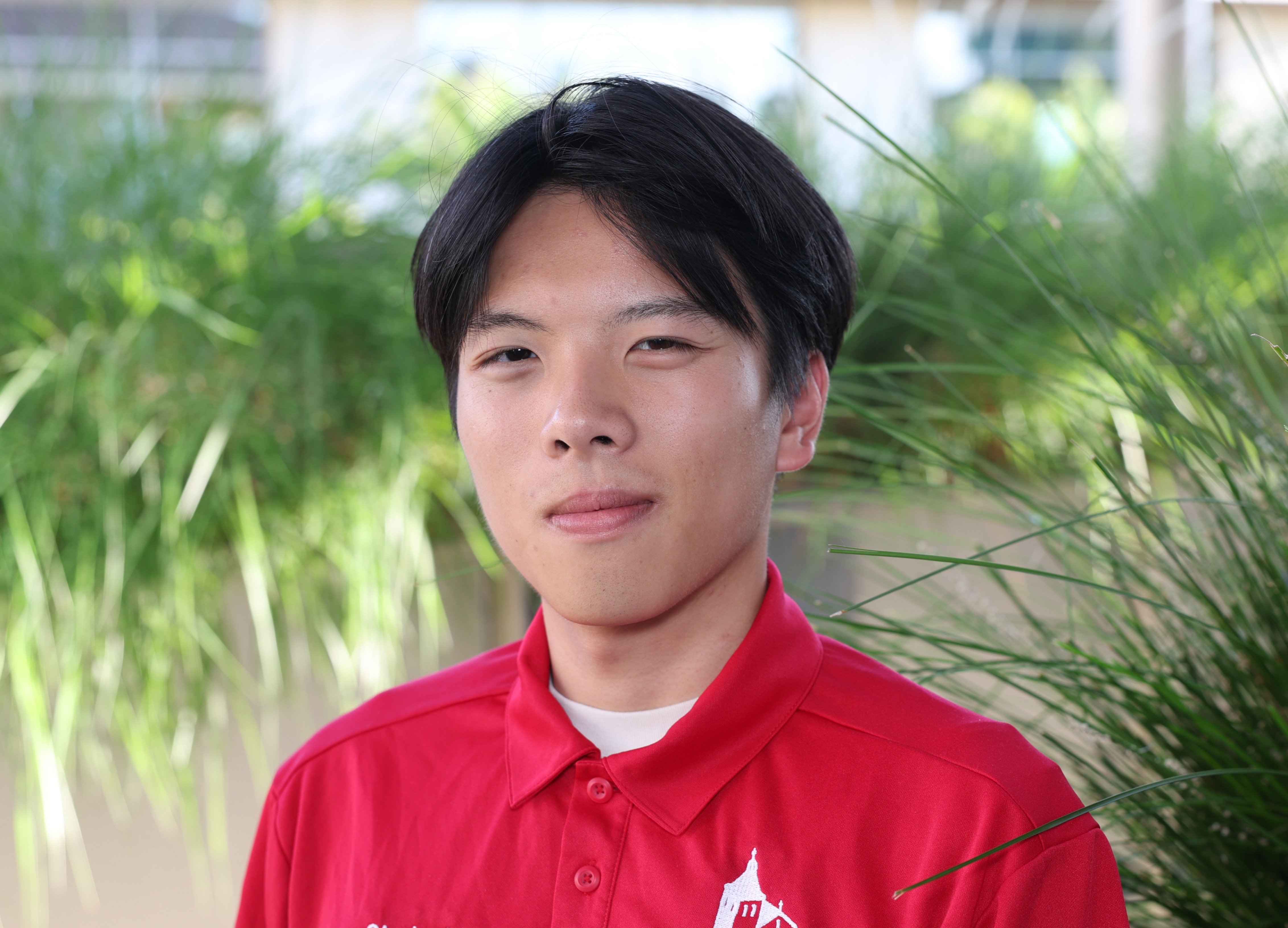
From creating automated workflows for program management processes to developing algorithms for a machine learning tool, ABPDU student assistant Tyler Pham has applied his coding skills to a variety of computational needs at Lawrence Berkeley National Laboratory (Berkeley Lab). Currently a physics major at Santa Clara University, Pham recounted his projects that have expanded his programming expertise as well as his understanding of biomanufacturing and the bioeconomy.
How did you get connected with ABPDU?
I first heard about ABPDU when I was a junior in high school. Around that time, I was developing an interest in physics and math, which led me to start programming. In one of my classes, I learned about a program called Pilot City, which connects students with internship opportunities in the Bay Area. I saw on Pilot City’s website that there was an opportunity to work with ABPDU and help them develop automated workflows for their program management team. Together with one of my classmates, I developed a software prototype that led me to getting an interview at ABPDU. I ended up getting a position as an ABPDU student assistant in 2021. After that, my position was extended and I’ve remained on the team ever since.
What types of projects have you worked on?
My first projects focused a lot on creating automated workflows for ABPDU’s program management team. I developed a series of automations for the team to use, and then found a way to host them all professionally so that they are robust and last long-term. It’s basically an automation package with several features that optimize the team’s day-to-day workflows.
About a year ago, I started getting more interested in language models and trying to implement them for chatbot interface applications. My supervisor, James Gardner, had the idea that a chatbot could be useful for the Agile BioFoundry (ABF) program management team, which manages a database of ABF’s industry and academic partnerships. The database was difficult to filter through — if you wanted to find a certain project, you had to type the exact keywords. I developed a software application that helps ABF’s team easily look up project information via a chatbot format. The application involved many moving parts. I had to first make sure the database was cleaned, move it to a central location, and then make sure the file formats fit certain standards. I was recently able to get the application up and running, and it’s been successful.
After that project concluded, I was interested in working on more mathematical projects. As a physics major, I’m really eager to test my skills and see if I can apply mathematics to the real world, because that’s what I really love doing. James got me in touch with Héctor García Martín, a staff scientist at Berkeley Lab who is working on making synthetic biology more quantitative. His team developed the Automated Recommendation Tool (ART), which uses machine learning to guide synthetic biology systematically. I’ve been helping his team integrate specific mathematical techniques into ART, which will help the tool provide more well-rounded predictions.
What impact has working at ABPDU had on you and your career goals?
Working at ABPDU has really helped me improve my coding skills. I enjoy practicing programming outside of my school work, and this experience has given me the opportunity to do that. It’s one thing to do a project on your own, but being able to develop something that scientists use and find helpful is very gratifying.
The people at the Lab have always been supportive of me, and that has allowed me to learn and grow more. This experience has made me feel really prepared and eager to start working in the data industry after I graduate.